
Sheffield Greyhound Track Focus — A Textbook Trap 1 500m Profile
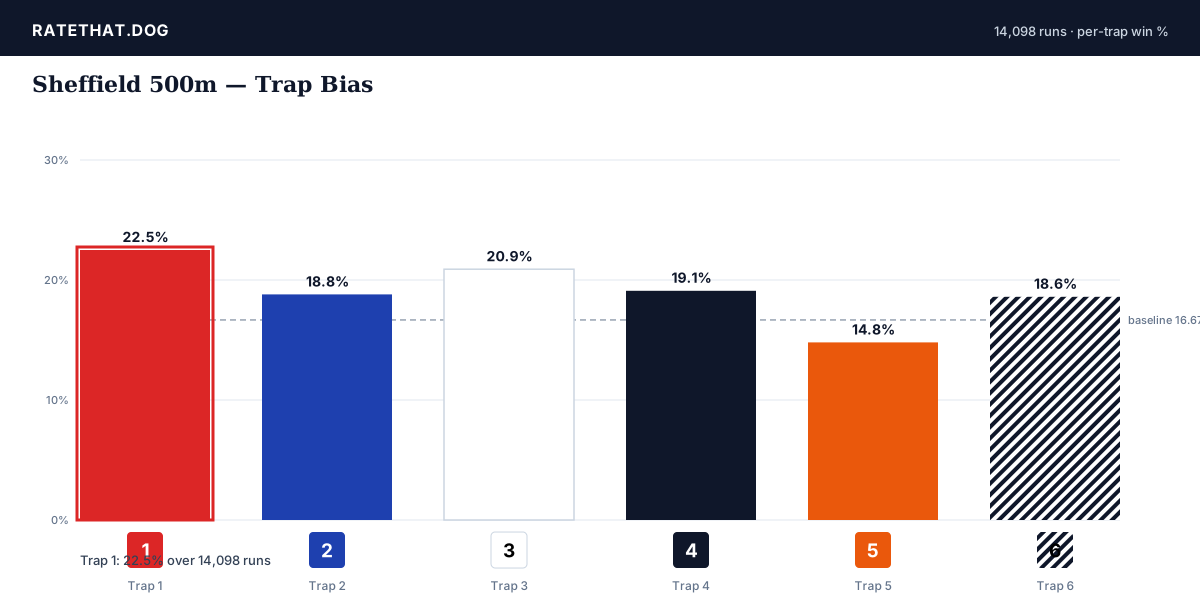
Sheffield's main 500m distance is a clean Trap 1 venue — 22.5% over 14,098 runs. Here's why, and how to bet Sheffield using the rail edge plus rating.
What's special about Sheffield at 500m?
Sheffield is one of the cleanest examples of a tight-bend, rail-favouring track in UK greyhound racing. Across 14,098 runs at the main 500m distance, **Trap 1 wins 22.5% of races** — exactly matching Hove and Monmore at the same headline rate.
If you're already comfortable betting Hove or Monmore at their main distances, Sheffield 500m carries over almost identically. Same shape of bias, same kind of geometry, same betting angles.
Why does Trap 1 dominate at Sheffield?
Geometry, again. The 500m start at Sheffield delivers Trap 1 to a tight first bend on the rail. Rail dog gets there first, takes the racing line, forces the wider runners around. Six dogs into a tight bend creates compression, and Trap 1 escapes most of it.
Sheffield's other distances behave more variably — the 500m is the bread-and-butter format and the cleanest signal. Trap 3 sits at 20.9%, Trap 4 at 19.1%; the ladder steps down from Trap 1 in classic rail-bias fashion.
How does Sheffield compare to Hove and Monmore?
Almost identical at the headline. **Sheffield 500m T1: 22.5%** over 14,098 runs. **Monmore 480m T1: 22.5%** over 16,070 runs. **Hove 500m T1: 22.5%** over 15,428 runs. All three are textbook tight-bend, rail-bias venues, and a system that works at one usually works at the others.
The differences are at the margins. Sheffield's grading runs slightly thinner; Monmore has the largest sample. For practical betting purposes, treat them as a triad of similar-shape venues.
How should I bet at Sheffield?
Three rules. **One:** prioritise Sheffield 500m Trap 1 dogs in your shortlist when their composite score is above the field average. The combined position is one of the strongest UK setups. **Two:** discount Sheffield 500m Trap 5 or 6 picks unless the rating is overwhelming. **Three:** check sample size when you see a strong-looking unfamiliar Sheffield dog — the venue's grading is fair, but the kennels racing there cycle, and a recent debutant has less form to lean on.
ratethat.dog/track/Sheffield has the per-distance breakdown plus live cards. Cross-track view on Track Data; Sheffield trainer form on Trainer Stats.
Is Sheffield a good system-builder track?
Yes — and the templates port directly from Hove or Monmore. "Sheffield 500m AND Trap 1 AND composite ≥ 55" produces a clean qualifying list, with the trap-bias and rating compounding. Pair with Race Confidence ≥ 60 to filter out the messy races.
The market has long understood Sheffield's Trap 1 bias, so don't expect blind backing of the trap to profit. The edge comes from finding Trap 1 dogs at fair prices — typically 4.0+ SP — where the geometry compounds the rating without the price already pricing it all in.
Frequently asked questions
What's the best trap at Sheffield?
Trap 1 at the main 500m distance, where it wins 22.5% of races over 14,098 runs — matching Hove and Monmore at the same headline rate.
Why does Sheffield favour Trap 1?
Track geometry. The 500m start gives Trap 1 a fast run to a tight first bend on the rail, where the inside dog takes the racing line and forces wider runners around it.
Is Sheffield similar to Hove and Monmore?
Yes — all three are tight-bend, rail-bias venues with 22.5% Trap 1 win rates at their main distances. Systems that work at one often work at the others.
Are Sheffield's other distances also Trap 1?
The 500m has the cleanest signal. Other Sheffield distances should be checked separately on the track page.
Where can I see live Sheffield racing?
On the Sheffield track page. Live cards plus per-distance trap breakdowns.