
What is Race Confidence in Greyhound Betting? When the Model Tells You to Walk Away
Race Confidence is a 0-100 score on every ratethat.dog race that tells you how predictable the race actually is. High = bet with conviction. Low = walk away. Here's how it's built.
What is Race Confidence?
Race Confidence is a 0-100 score that sits on every ratethat.dog racecard. It tells you how predictable the model thinks the race is — not which dog will win, but whether the race is the kind of race a top pick is likely to win in. High Race Confidence = a race the model expects to behave; low Race Confidence = a race that's likely to throw up a surprise.
Used well, Race Confidence is the on/off switch on a system. If your filters surface a top pick in a race with a confidence of 80, you back it with normal stakes. If the same filters surface a top pick in a race with a confidence of 25, you skip — the underlying race is too messy to trust the rating.
How is Race Confidence calculated?
Four inputs, weighted: race grade (35% weight), track-and-distance profile (30%), the gap between the model's top dog and the rest of the field (25%), and a handicap penalty (10%) that knocks confidence down for handicap races where the start positions distort form.
The intuition: a higher-grade race has more consistent dogs, a track-distance with a strong bias signature is more predictable, a wide composite-score gap means one dog stands out clearly, and handicap races inject extra noise. Together they produce a single number you can read in two seconds.
What counts as high Race Confidence?
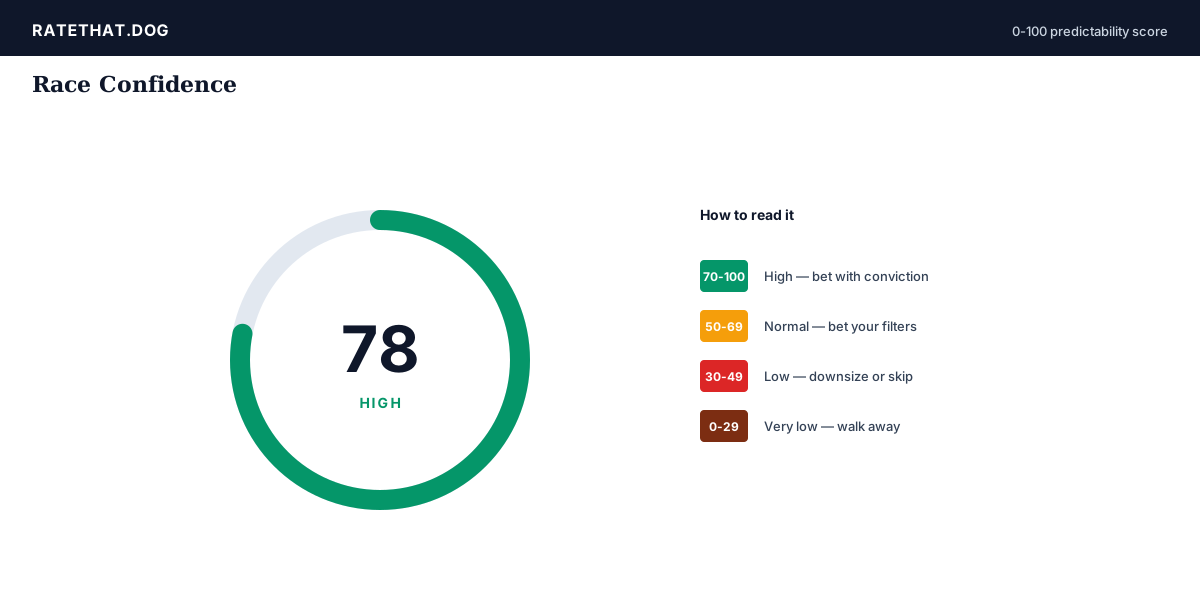
Above 70 is genuinely high. The race is likely to play out in line with form — favourites and top picks have an above-average chance, and an upset would be unusual.
50-70 is normal — bet your filters as you would. Below 50 is a noisy race; results in the bottom band hit at meaningfully lower rates than top-band races, so you should either skip or downsize. Below 30 is the model openly telling you it doesn't know — those races are best left alone unless you have a very specific human-readable angle.
How do I use Race Confidence in a system?
Two practical moves. One: add a minimum Race Confidence filter to your system — "composite top pick AND race confidence ≥ 60" weeds out the worst races your filter would otherwise back into. Two: tier your stakes — full unit on race confidence ≥ 70, half-unit on 50-70, skip below 50. Most users find the second approach lifts ROI without much loss in volume.
Race Confidence pairs especially well with Hot Dogs. A composite-60+ Hot Dog in a race confidence ≥ 70 race is one of the strongest signals on the platform.
Should I never bet a low-confidence race?
There's a case for it. Low-confidence races have wider odds — the market reflects the same noise the model sees. A genuinely strong reason to back a longshot in a chaotic race can pay better than a favourite in a tight one. But that's a niche, expert play; for most bettors most of the time, treating low-confidence races as skip races is the right default.
If in doubt: confidence high, bet what you would. Confidence low, walk away unless you have a specific edge.
Frequently asked questions
What does Race Confidence measure on ratethat.dog?
How predictable the race is. It blends grade quality, track-and-distance profile strength, the composite-score gap between the top pick and the field, and a handicap penalty into a single 0-100 score.
What's a good Race Confidence threshold to bet?
60+ is a sensible default. Below 60 the race noise starts to overwhelm the model's edge. Above 70 you can bet with conviction.
Why are handicap races penalised?
Because handicap starts (where dogs begin from staggered positions) distort how form translates to today's race. The model handles them but with less confidence than scratch races.
Does Race Confidence predict longshots?
No — it predicts noise. Low Race Confidence means upsets are more likely, but it doesn't tell you which dog will be the upset.
Where do I see Race Confidence on a racecard?
In the race header on every race page on ratethat.dog. The score is colour-coded so you can scan a card for high-confidence races without reading the number.