
What Do the Trap Colours Mean in Greyhound Racing?
Trap 1 is red, 2 is blue, 3 is white, 4 is black, 5 is orange, 6 is striped. Here's why the colours are standardised across UK greyhound racing — and how the trap matters for your bet.
What do the greyhound trap colours mean?
Across every UK greyhound venue, the six traps are coloured the same way. **Trap 1 is red. Trap 2 is blue. Trap 3 is white. Trap 4 is black. Trap 5 is orange. Trap 6 is striped — black and white quartered.** The dog wears a numbered jacket matching its trap, so you can identify any runner mid-race from the colour alone.
It's the single piece of greyhound racing trivia worth memorising once. After that, scanning a finish — on TV, in person, or on a replay — becomes effortless.
Why are the trap colours standardised?
For TV legibility, mostly. UK greyhound racing has been broadcast since the 1940s, and a consistent colour scheme means every viewer — whether they're at one track or watching another — can read the field instantly. The colours were finalised decades ago and haven't changed since.
Practically, it also helps stewards and trainers identify dogs at speed. A 30mph blur of fur is easier to track by jacket colour than by reading a number.
Does the trap colour mean anything for performance?
Not directly — but the trap number does. The colour is just a label for the trap; the trap itself has very different chances depending on the venue. At Hove 500m, Trap 1 wins 22.5% of races. At Harlow 238m, Trap 1 wins just 17.5% — and Trap 6 wins 24.3%. The colour doesn't change those numbers; the venue and distance do.
When you're handicapping a race, look at trap and venue together. "Red Trap 1 at Monmore" is a strong position. "Red Trap 1 at Harlow 238m" is not.
What's the easiest way to remember the trap colours?
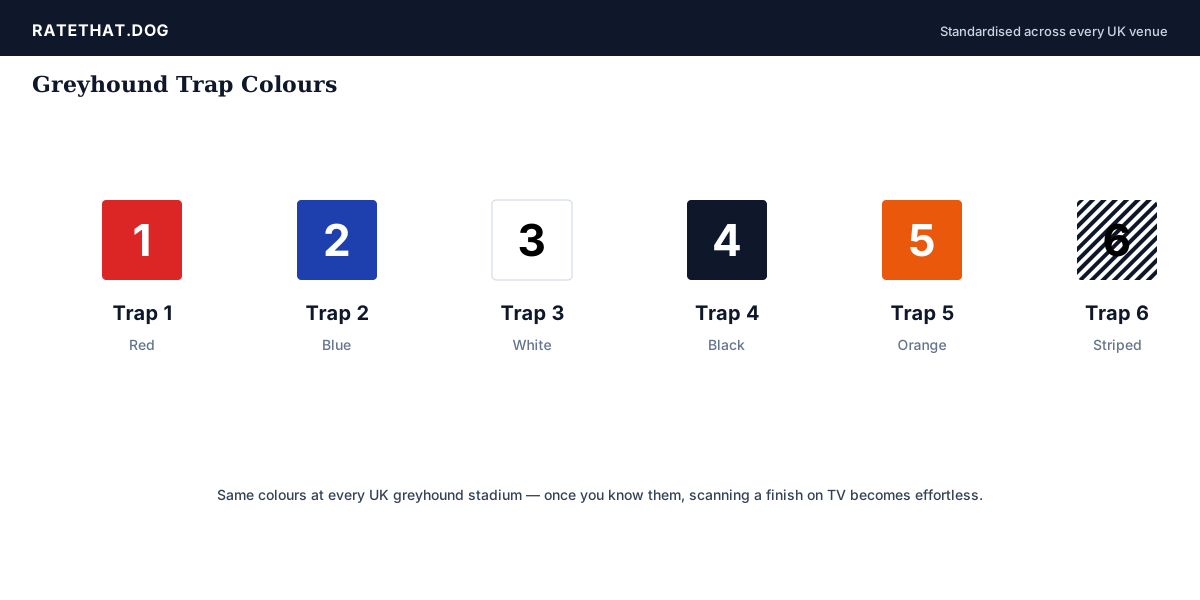
The first three follow rough rainbow logic — red, blue, white (well, blue is rainbow-ish). The next three are about contrast: black, then orange (high-contrast against black), then striped to differentiate visually from the others.
On ratethat.dog's racecards, every dog's trap is shown as a coloured badge with the number inside, so you don't actually need to memorise the order — but it does make TV viewing more enjoyable.
Where can I see the trap colours on a racecard?
On every race page on ratethat.dog, the trap column uses the official colour for each runner. Same on the Dog Selector and on today's racing card. The colour is a consistent visual cue across the platform — and the per-track Track Data page shows the trap-by-trap performance breakdowns.
Once you start associating a dog's name with its trap colour, you'll find it much easier to remember which dog is which — particularly across a card where the same trainer might run several dogs in different races.
Frequently asked questions
What colour is Trap 1 in greyhound racing?
Red. Standard across every UK greyhound venue. Trap 2 is blue, 3 is white, 4 is black, 5 is orange, 6 is striped (black and white).
Why is Trap 6 striped instead of a solid colour?
For visual distinctiveness. Black-and-white stripes stand out clearly against any track surface and any other jacket colour, making Trap 6 the easiest to identify at speed.
Are Tote board and bookmaker boards the same colours?
Yes. UK greyhound trap colours are standardised across all bookmakers, on-track displays and broadcast graphics.
Does the colour of the trap affect who wins?
No — but the trap number does, and the bias varies by track. The colour is just a visual label; the position is what determines bias.
What about Trap 7 or 8 in greyhound racing?
Standard UK greyhound races are six runners, so there's no Trap 7 or 8. Some Irish and overseas races use eight-trap formats with extended colour schemes.