
Trap Bias in UK Greyhound Racing — Which Traps Actually Win
Trap bias is real — but it's wildly different from track to track. Here's where each trap genuinely wins, with win percentages drawn from over 250,000 UK greyhound runs.
What is trap bias in greyhound racing?
The short answer: trap bias is one of the most reliable edges in greyhound betting, and it's wildly different from track to track. Trap 1 dominates at Monmore, Hove, Sheffield and Towcester. Trap 6 dominates at Harlow and Central Park. At Sunderland, the spread is so flat there's barely any bias at all. If you bet greyhounds without knowing your venue's bias, you're throwing away an edge that took five seconds to compute.
Trap bias is the tendency for dogs in certain traps to win more often than others, all else being equal. It's caused by track geometry (where the first bend sits, how tight the rail is) and the running styles of dogs typically drawn there. If a track were genuinely unbiased, every trap would win 1-in-6 races (16.67%). When Trap 3 wins 22% of races over 15,000+ runs, that's not luck.
Which trap wins the most at each UK track?
Per-track winners at the most-run distance (figures rounded; bold = the dominant trap):
| Track | Distance | Runs sampled | Top trap | Top trap win % |
|---|---|---|---|---|
| Monmore | 480m | 16,070 | Trap 1 | 22.5% |
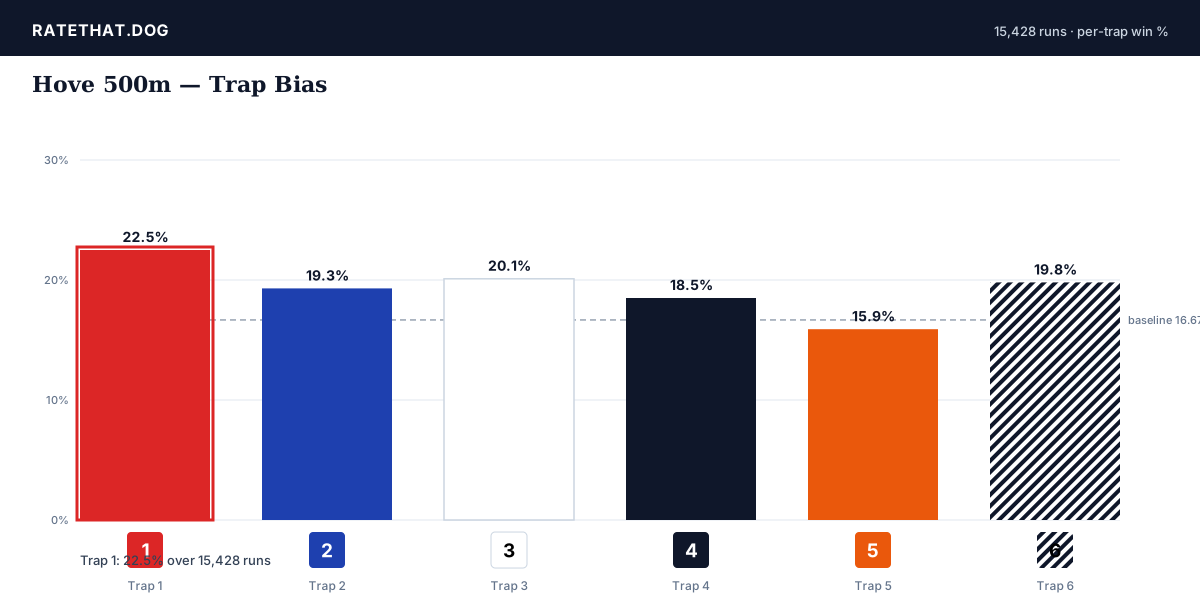
| Hove | 500m | 15,428 | Trap 1 | 22.5% |
| Sheffield | 500m | 14,098 | Trap 1 | 22.5% |
| Towcester | 500m | 11,029 | Trap 1 | 22.7% |
| Romford | 400m | 21,659 | Trap 1 | 20.4% |
| Oxford | 450m | 11,852 | Trap 1 | 21.3% |
| Dunstall Park | 480m | 4,934 | Trap 1 | 21.6% |
| Yarmouth | 462m | 15,247 | Trap 3 | 22.2% |
| Newcastle | 480m | 20,270 | Trap 3 | 20.5% |
| Henlow | 460m | 417 | Trap 3 | 25.9% |
| Kinsley | 462m | 15,838 | Trap 3 | 20.1% |
| Doncaster | 450m | 9,017 | Trap 6 | 23.8% |
| Central Park | 277m | 9,624 | Trap 6 | 22.1% |
| Harlow | 238m | 14,833 | Trap 6 | 24.3% |
| Nottingham | 500m | 14,407 | Trap 2 | 20.0% |
| Sunderland | 450m | 16,038 | Flat (Trap 1) | 18.7% |
Why do some tracks favour Trap 1 and others Trap 6?
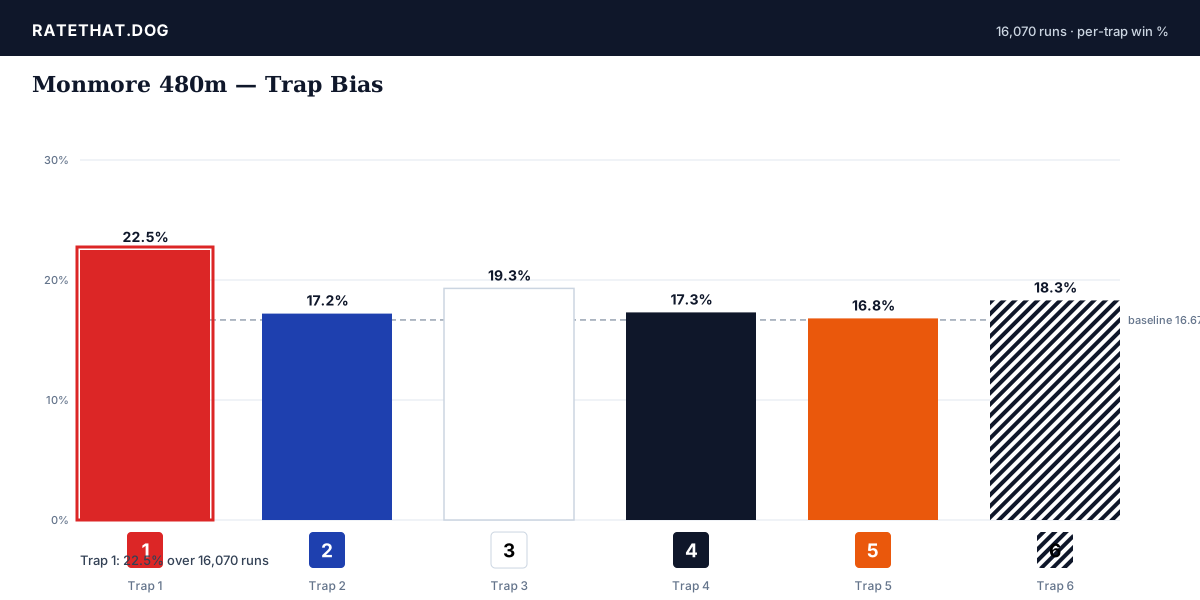
Most UK tracks have a tight first bend that arrives quickly. The dog drawn closest to the rail — Trap 1 — gets there first and takes the racing line. That's why Hove, Monmore, Sheffield and Towcester all show a Trap 1 edge at their main distances. The full per-venue picture lives on the Track Data page.
Sprint tracks flip the logic. Over 238m at Harlow and 277m at Central Park, the first bend arrives so soon and at such an angle that clear wide running matters more than rail position. Trap 6 wins 24.3% at Harlow 238m and 22.1% at Central Park 277m — well above the 16.67% baseline.
Middle-distance Trap 3 tracks like Yarmouth 462m, Kinsley 462m and Newcastle 480m sit in between: Trap 3 gets a clean break without being squeezed.
Where is the strongest single trap edge in the UK?
On primary-distance samples of 1,000+ races: Harlow, Trap 6, 238m — 24.3% over 14,833 runs (a +7.6 percentage point edge over baseline); Doncaster, Trap 6, 450m — 23.8% over 9,017 runs; Towcester, Trap 1, 500m — 22.7% over 11,029 runs; and a tied 22.5% Trap 1 at Hove, Monmore and Sheffield over their main distances. Sharper edges exist within specific sub-distances — at Dunstall Park 660m, Trap 3 wins 38.1% of races, one of the most extreme biases in the dataset. The full per-distance picture lives on each track's Track Analysis page.
Which UK track has no trap bias?
Sunderland, 450m. Across 16,038 runs the win % spread between best and worst trap is just 2.26 percentage points (16.4% to 18.7%). That's as close to a flat track as the UK gets — pick on form, speed and grade alone. Newcastle 480m is similar; if you want a venue where the dog matters more than the draw, start there.
How do I use trap bias when I'm picking a bet?
Three rules. One: filter your shortlist by venue first, draw second — at Hove, a Trap 1 with a strong composite score is a stronger position than the same dog in Trap 5. Two: don't double-count — if a rating is already high, the trap edge is partly priced in; use bias as a tie-breaker between two similar ratings. Three: check the distance, not just the track — Hove 500m is a Trap 1 track, Hove 285m is much flatter. The Dog Selector lets you filter by both at once.
Frequently asked questions
What is the best trap in greyhound racing?
There isn't one. Trap 1 wins most often across UK racing as a whole (21-22% at standard middle-distances), but it's massively venue-dependent. At sprint tracks like Harlow and Central Park, Trap 6 wins more often than Trap 1.
Why does Trap 1 win so often?
Trap 1 sits closest to the rail. On most UK tracks the dog that gets to the first bend on the rail saves ground and forces wider runners to lose pace.
Are trap colours the same at every track?
Yes — Trap 1 red, 2 blue, 3 white, 4 black, 5 orange, 6 striped (black and white).
Where can I see updated trap-bias stats?
Every UK track has its own page on ratethat.dog — try Hove, Monmore or Yarmouth. Stats refresh as new races settle.
Does trap bias guarantee a winner?
No. Even Harlow's Trap 6 at 238m — among the strongest single-trap edges in the UK — loses 75.7% of its races. Use bias as one input, not the whole decision.