

What is Greyhound Suitability? Track, Distance, Trap and Class Explained
Suitability is the quiet workhorse of ratethat.dog's ratings — four scores that tell you whether this dog has actually performed at this kind of race before. Here's how it works.
What is suitability in greyhound racing?
Suitability is a 0-100 score expressing how well a dog has historically performed at the conditions it's facing today. There are four suitability components: **track suitability** (how does this dog do at this venue?), **distance suitability** (at this race length?), **trap suitability** (from this trap number?) and **class suitability** (at this grade?). They combine into a single overall suitability score on every ratethat.dog racecard, and you can dig into any individual runner's full record on the Dogs database — including breeding context via Sires & Dams.
If form is "how is the dog running recently?", suitability is "is the dog running today's race?". Two different signals. Both matter.
How is suitability calculated?
From the dog's full historical record. For each component, we take the dog's win and place rate at that exact condition (this track, this distance, this trap, this class), weight it by sample-size confidence (5 runs at the venue is less reliable than 50), and rescale to a 0-100 figure where 50 is the average dog at that condition.
The confidence weighting is what stops a small-sample standout (a dog that's run twice at Hove and won both) being treated the same as a genuine specialist (a dog that's run 30 times at Hove and won 12). The latter scores higher; the former scores closer to 50.
What does a high suitability score mean?
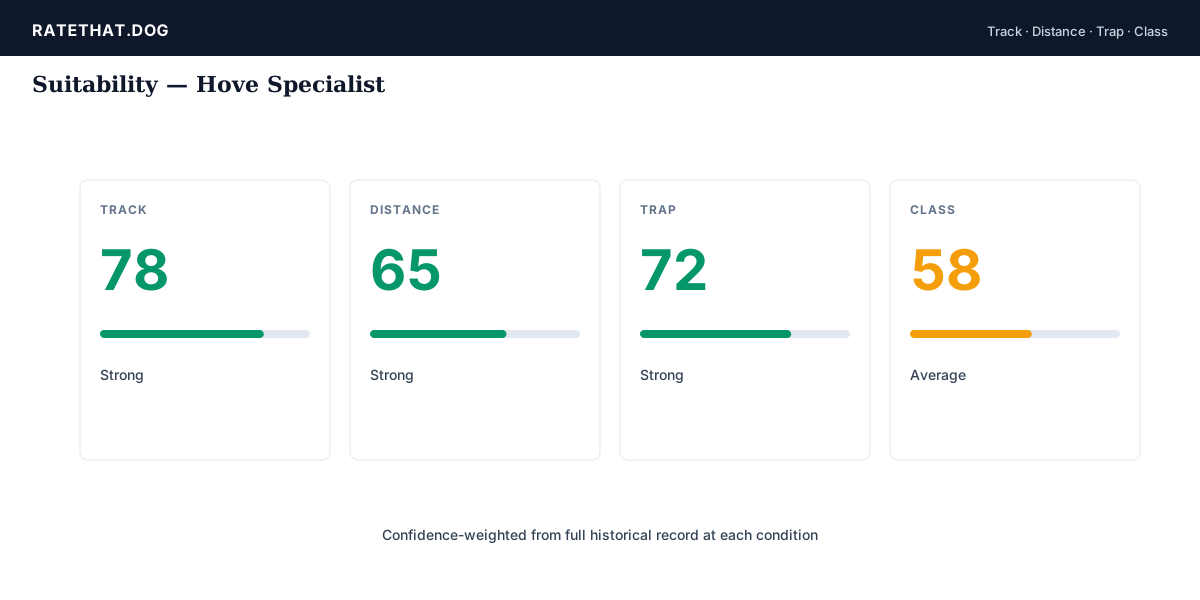
Above 60 is meaningfully suitable — the dog has a real history of performing at this kind of race. Above 70 is genuinely strong (this dog is a specialist at this combination). Above 80 is rare and indicates a bona fide course-and-distance expert.
Below 40 is the inverse: the dog has historically struggled at this kind of race. Below 30 is a strong negative signal — the dog might be a winner elsewhere, but it's not been a winner at the conditions it's facing today.
How does suitability factor into the composite score?
It varies by distance. At sprint (under 380m), suitability gets 25% weight in the composite score. At standard distance (380-480m), it's 25%. At long (480-600m), it's 15%. The dropping weight at longer distances reflects that field speed becomes a stronger signal as race distance increases.
Suitability is never the dominant component — the composite blends it with performance, first-bend speed and field speed. But it's the input that captures "has this dog actually done this before?" — which is what stops the model fooling itself with form figures from radically different conditions.
How do I use suitability when I'm picking a bet?
Two practical moves. **One: cross-check the composite top pick's suitability.** A composite top pick with suitability 70+ is much stronger than a composite top pick with suitability 35. The latter is a pick based on form alone; the former is form plus confirmed track-and-distance performance. **Two: filter for suitability specialists in the Dog Selector.** "Track suitability ≥ 65 AND composite rank in race ≤ 3" surfaces dogs that combine specialist credentials with current strong rating.
Suitability also explains races where the form figures look strong but the result disappoints. A dog with form "1112" but track suitability 30 might have been winning at a different venue — and stepping into a track it doesn't suit. The form is real; the suitability tells you it might not transfer.
Frequently asked questions
What does suitability mean in greyhound betting?
How well a dog has historically performed at the specific track, distance, trap and class of today's race. Centred on 50; above 60 is meaningfully suitable.
What are the four suitability components?
Track suitability, distance suitability, trap suitability and class suitability. They combine into a single overall suitability score on every ratethat.dog racecard.
Why does suitability use confidence weighting?
To stop small-sample flukes being treated the same as genuine specialists. A dog with 2 runs at a track is rated less confidently than a dog with 30 — the larger sample produces a more trustworthy score.
How important is suitability vs form?
Both matter. Form tells you how the dog is running recently; suitability tells you whether the dog runs today's specific kind of race. The composite score blends both.
Can a dog be suitable but in poor form?
Yes — and these can be value bets. A dog that's been losing at a different track and is now back at its best venue often outperforms its recent form. The suitability score catches what the form figure misses.