

What is the Composite Score? The Greyhound Rating That Picks 25.5% of UK Winners
The Composite Score is the headline number on every ratethat.dog racecard. It's a distance-aware, field-relative rating built from four signals — and on 188,000 historical races, the top-ranked dog won 25.5% of the time. Here's how it works.
How is the Composite Score calculated?
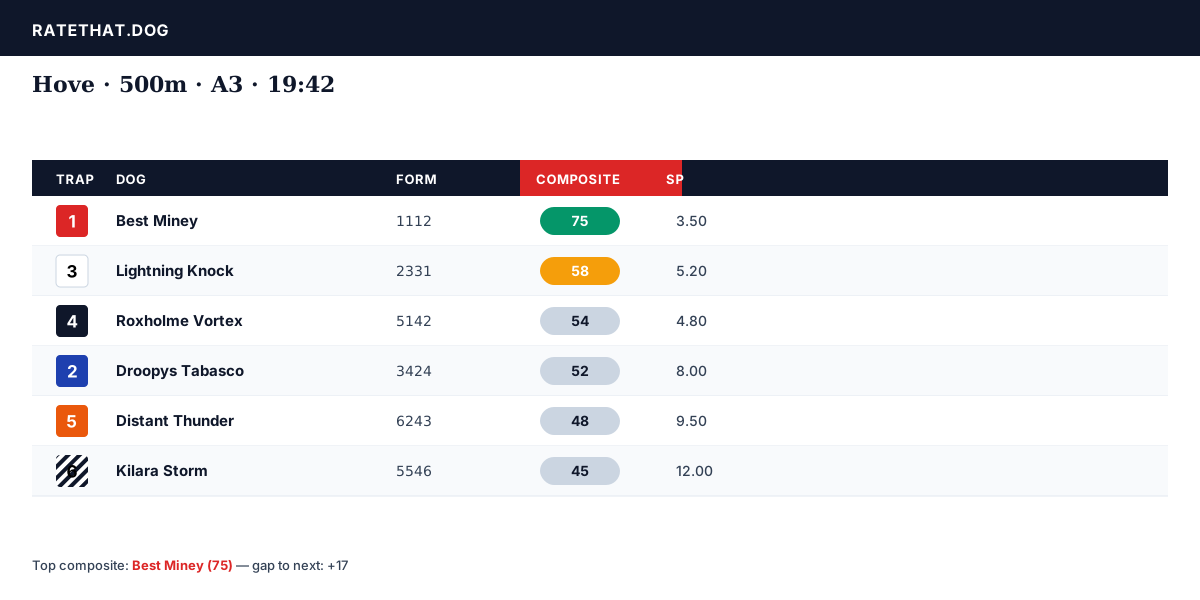
The Composite Score is the single number on a ratethat.dog racecard that summarises how strong each runner is, on a 0-100 scale where the field is centred around 50. It blends four ratings — performance, suitability, first-bend strength and field speed — into one distance-aware figure. On 188,000 pre-race snapshots, the top-ranked Composite Score dog won 25.5% of races in out-of-sample testing, up from 23.4% under the previous model. At standard distance (380-480m), the lift was sharper still: from 22.6% to 25.8%, with a +5.6 percentage point ROI improvement on level stakes.
The score blends four 0-100 ratings, each centred on the dogs in this specific race: Performance (recent form quality — pace, finishing position, beaten distance, sectional, grade), Suitability (historical record at this track, distance, trap and class, weighted by sample confidence), First-Bend Rating (early-speed strength, ranked per race), and Field Speed Rating (adjusted run-time strength, also ranked per race). The blend isn't constant — each distance band has its own weights, derived from a grid search over 188,000 pre-race snapshots and validated on a 70/30 train/test split by race date.
| Distance band | Performance | Suitability | First bend | Field speed |
|---|---|---|---|---|
| Sprint (under 380m) | 70% | 25% | 5% | 0% |
| Standard (380-480m) | 0% | 25% | 10% | 65% |
| Long (480-600m) | 35% | 15% | 0% | 50% |
| Marathon (600m+) | Legacy formula | — | — | — |
Why is the rating distance-aware?
Different distances reward different traits. At a 270m sprint, the race is decided in the first three seconds — early speed dominates, which is why performance gets 70% weight. At a 660m marathon, stamina and pace judgement matter more than first-bend pop. At a standard 480m, raw run-time dominates because the lap is long enough for class and form gaps to play out. A single all-distances blend smudges these realities together — splitting by band lifts top-pick strike rate by roughly two percentage points overall and almost three points at standard distance, which is where most UK greyhound racing happens.
How accurate is the top Composite Score in real betting?
Out-of-sample validation: all distances combined — 25.5% (up from 23.4%); standard distance (380-480m) — 25.8% (up from 22.6%). These are strike rate numbers — the percentage of races where the #1 Composite dog crossed the line first. A 25.5% rate at average SPs of around 4.0 implies a small but meaningful long-run edge over blind backing of the top pick. You can see how today's top composite picks are settling on the Today's Results page, or grab the day's strongest selections on Strong Picks.
What's the connection between the Composite Score and Hot Dogs?
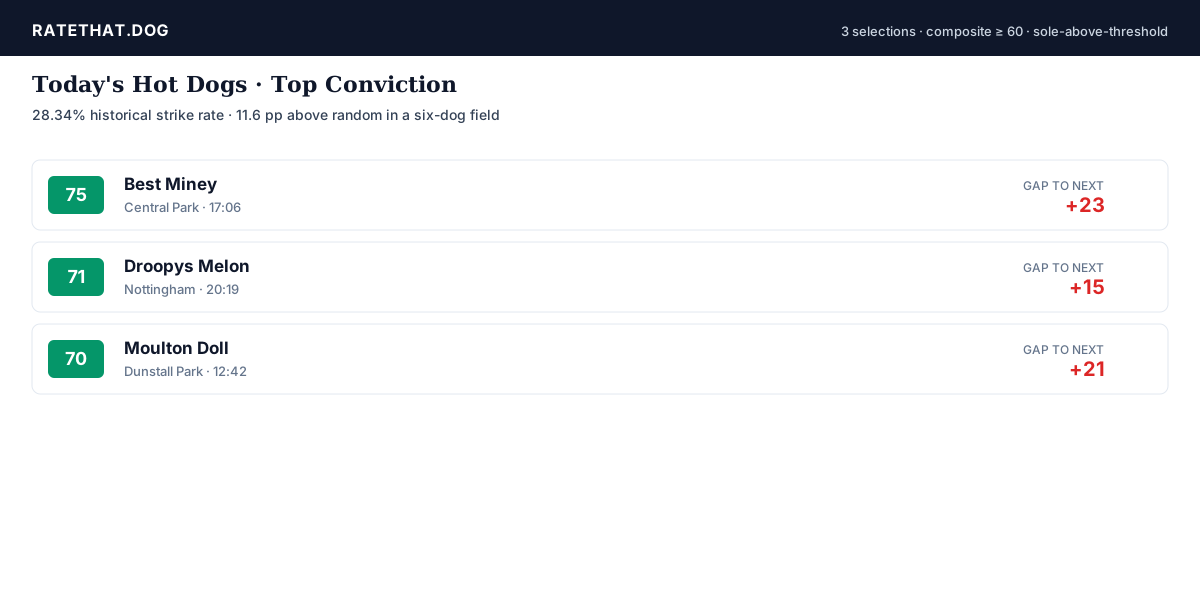
Hot Dogs are the strict-filter version of the Composite Score. A Hot Dog has a Composite of 60 or higher AND is the only dog in its race above 60, with a meaningful gap to the next-best. That second condition is what makes them special — a 70 in a field where the next-best is 55 is a much stronger signal than a 70 where the next-best is 67. In re-validation on the new Composite scale, Hot Dogs hit at 28.34% strike rate — about 11.6 percentage points above random in a six-dog field.
Today, 27 April 2026, there are 15 Hot Dogs across UK racing — top of the list is Best Miney at Central Park 17:06, with a Composite of 75 and a 23-point gap to the next-best in the race.
Should I bet every top Composite Score pick?
No. A 25.5% top-pick strike rate is fantastic by greyhound standards, but it's still a losing rate three times out of four. Use the Composite gap to gauge confidence (a +12 lead is a different signal to a +1 lead), cross-reference with trap bias at the venue, and let Hot Dogs or the Dog Selector do the filtering when you want higher-conviction picks.
Frequently asked questions
What does a Composite Score of 60 mean in greyhound racing?
A Composite Score of 60 puts a dog meaningfully above the typical field average (around 50). It's the threshold we use for the Hot Dogs strategy — dogs at 60+ have historically hit a 28.34% strike rate when they have no rival above the same threshold.
Is the Composite Score the same thing as a speed rating?
No. Speed is one of four inputs. The Composite blends performance, suitability, first-bend strength and field-relative speed in different proportions for sprint, standard and long-distance races.
How often is the Composite Score updated?
Once per race, snapshotted before the off and frozen at race time. We never recompute snapshots after a race finishes, so the score you see on a racecard is the same one used to evaluate the model's accuracy afterwards.
Why is the standard-distance blend 65% field speed and 0% performance?
Because that's what the historical data said performed best. In the 70/30 out-of-sample test, putting field-relative run time at the centre of the standard-distance blend lifted top-pick strike rate from 22.6% to 25.8%. The performance signal is still in the system — it sits inside the suitability score — but raw form was no longer adding incremental value at standard distance once field speed was weighted properly.
Where do I see the Composite Score in a race?
On every race page on ratethat.dog. It's the headline rating column on the racecard table, and it drives the order dogs are sorted in by default.