

Sectional Times in Greyhound Racing — The Underused Signal
Sectional times measure how fast a dog ran each segment of a race. They're 15% of our performance rating and often spot improvers before form figures catch up. Here's how to read them.
What is a greyhound sectional time?
A sectional time is the time the dog took to cover a specific portion of the race — usually the first bend or the back straight. Most UK tracks publish first-bend sectional times alongside the overall winning time on every result, accurate to 1/100th of a second.
The sectional tells you something the overall time can't: where in the race the dog's effort was spent. A dog that ran a fast first sectional but a slow overall time finished poorly. A dog that ran a slow first sectional but a fast overall time came home strong. Both pieces of information matter; the overall time alone smudges them together.
How do sectional times factor into ratethat.dog's ratings?
**Sectional progression** is one of five inputs into our Performance Rating — weighted at 15%. The other four are pace (30%), finishing position (25%), beaten distance (20%) and grade adjustment (10%).
Sectional progression specifically measures whether a dog is getting faster (improving sectionals) or slower (deteriorating sectionals) across its recent runs. It catches improving dogs before their overall finishing positions do — a dog that's been finishing 4th or 5th but logging the fastest first sectional in its grade is signalling a coming win.
What's a 'good' first sectional time?
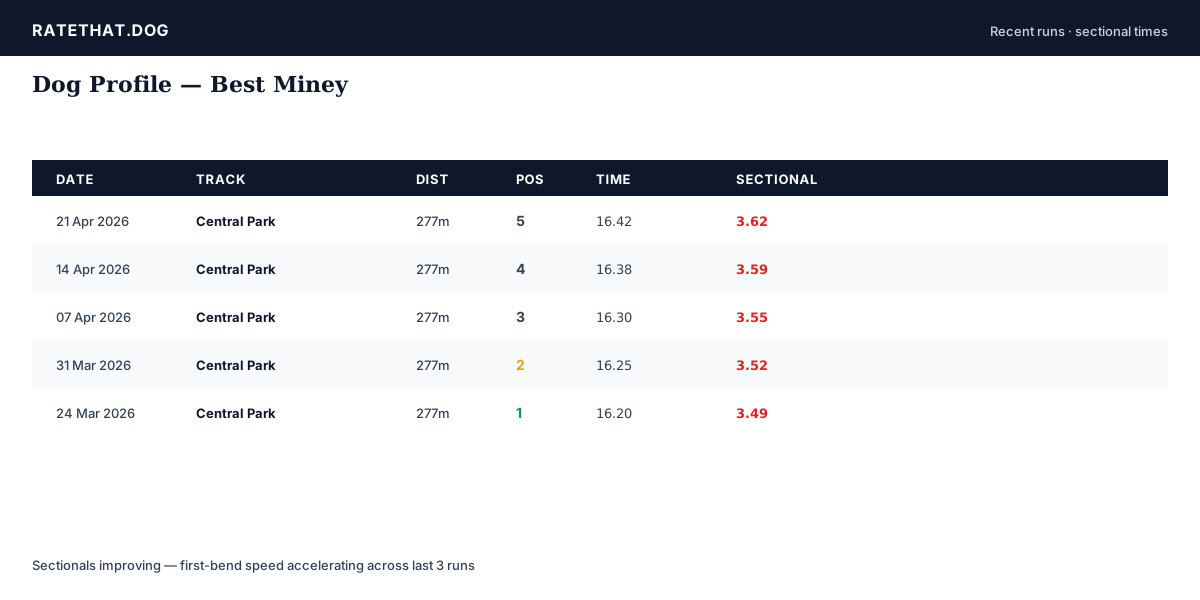
It depends on the track and distance — there's no universal good number, only relative ones. At Hove 500m, a sub-3.55s first sectional is fast. At Harlow 238m, sub-3.85s is fast. The number you care about is whether this dog's first sectional today is faster or slower than its recent runs at the same track and distance.
When you're reading a card, look at the trend across the last 3-4 runs at this distance. A dog whose first sectionals have been improving — say 3.62, 3.59, 3.55 over consecutive runs — is on the up. A dog whose first sectionals have been getting slower is fading.
Why are sectionals useful for spotting improvers?
Because they decouple effort from luck. A dog can finish 5th because it broke fastest from the trap and got barged at the bend — its sectional was elite, but the result looks awful. Form figures don't capture that nuance. Sectionals do.
The flip side is also true. A dog can finish 1st because it got a clean run from a slow break — its sectional was middling, but the result looks great. The form figure says "in form"; the sectional says "flattering". Catching the divergence between form and sectional is one of the cleanest BOF-tier edges available.
How should I use sectionals when I'm picking a bet?
Three practical moves. **One:** when two dogs have similar composite scores, prefer the one with stronger recent sectionals — that's a tie-breaker the rating may not have fully weighted. **Two:** use sectional progression to catch improvers — a dog with form 4-5-3 but accelerating sectionals is a value bet hiding in poor form figures. **Three:** be cautious of dogs with strong form but flat or worsening sectionals — the recent results may be flattering, and the next run may regress.
On ratethat.dog, the dog profile pages show recent sectional times alongside finishing positions, so you can read the divergence directly.
Frequently asked questions
What is a sectional time in greyhound racing?
The time taken to cover a specific portion of the race — usually the first bend. UK tracks publish sectionals to 1/100th of a second alongside every overall finishing time.
How heavily does sectional time factor into ratethat.dog's ratings?
Sectional progression is 15% of the Performance Rating, which is itself one of four inputs to the composite score. So sectionals indirectly contribute roughly 5-15% of a dog's headline composite, depending on distance band.
What's a fast first sectional in greyhound racing?
Track- and distance-dependent. At Hove 500m, sub-3.55s is fast; at Harlow 238m, sub-3.85s is fast. Look at the dog's own recent sectional trend rather than absolute numbers.
Can a dog have great form but bad sectionals?
Yes — and that's a yellow flag. Strong recent finishing positions paired with flat or worsening sectionals usually signals flattering form that will regress.
Where do I see sectional times on ratethat.dog?
On every dog's profile page, alongside finishing positions and adjusted run times. Recent sectional trends are visible at a glance.