

Yarmouth Greyhound Track Focus — Trap 3 Is King at 462m
At Yarmouth's main 462m distance, Trap 3 wins 22.2% of races over 15,247 runs. Here's why the middle trap dominates this track, and how to bet Yarmouth well.
What's special about Yarmouth at 462m?
Yarmouth doesn't fit the standard UK template. At most middle-distance tracks, the rail trap (Trap 1) wins most often. At Yarmouth's main 462m distance, **Trap 3 wins 22.2% of races over 15,247 runs**. That's a clean 5.5 percentage point edge over the 16.67% baseline, and it's been remarkably consistent across years.
If you bet Yarmouth using rules that work at Hove or Monmore, you'll lose. The track has its own logic.
Why does Trap 3 dominate at Yarmouth 462m?
Track geometry, again. The 462m start at Yarmouth puts the field into a long sweeping run before the first bend, with a wide first turn rather than a tight one. The middle traps — particularly Trap 3 — get clean running without being squeezed by either the rail dog or the wide-trap charger.
On a tight first bend (like Hove or Monmore), the rail dog dominates because it gets there first on the racing line. On a wider, longer first bend (like Yarmouth), the middle traps win because they have room to angle into the racing line without losing pace.
What about the other traps at Yarmouth?
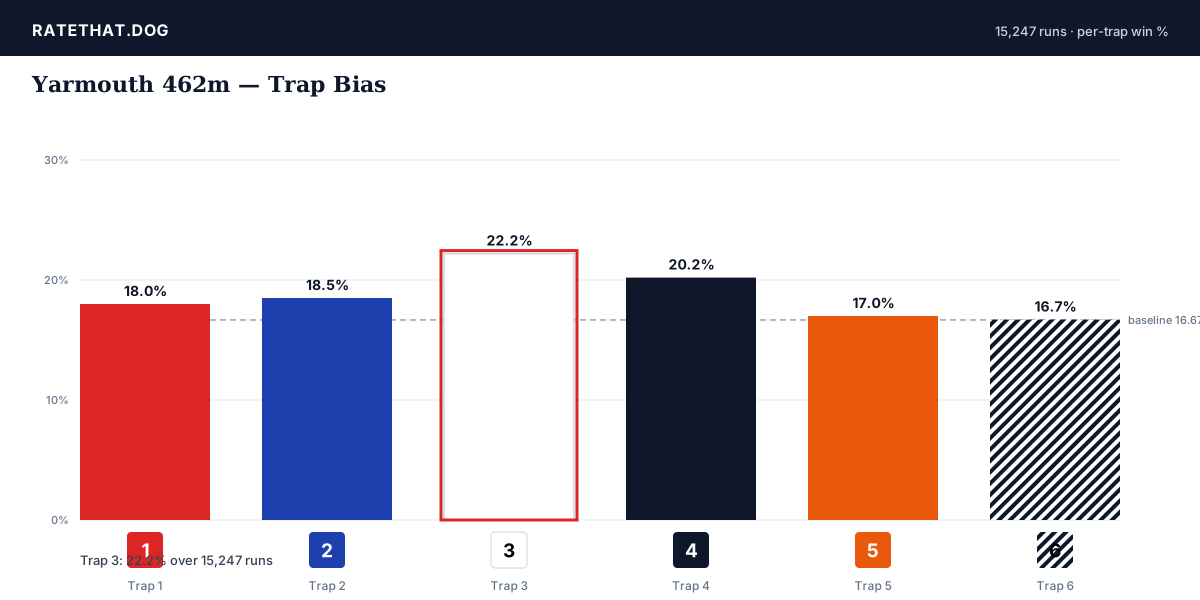
Trap 4 is also strong at 20.2%. Traps 1, 2 and 5 sit around the 17-18% mark — slightly above baseline but nothing remarkable. Trap 6 is the weakest at 16.7%, the lone trap genuinely below baseline.
The pattern is symmetrical around Traps 3-4: middle = strong, edges = weaker. Compare to Hove where it's a one-way tilt towards Trap 1, or Harlow where the bias is at the far wide end. Yarmouth is the rare "middle-loaded" UK profile.
How should I bet at Yarmouth?
Three angles. One: filter the Dog Selector to Yarmouth 462m and prioritise Traps 3 and 4 in your shortlist. A top composite-score dog in Trap 3 at Yarmouth is a stronger position than the same dog in Trap 1 — the opposite of how you'd think at Hove. Two: discount Trap 6 picks at Yarmouth 462m unless the rating is overwhelming. The trap is fighting against the dog. Three: cross-check with form figures from previous Yarmouth runs. Some dogs win at one trap shape but not another; specialist runners exist.
ratethat.dog/track/Yarmouth has the per-distance breakdown alongside live cards. Cross-track comparisons live on Track Data; current Yarmouth trainer form on Trainer Stats.
Is Yarmouth a good track for system building?
Yes. The Trap 3 edge is consistent enough across grades that a simple Yarmouth-Trap-3-Composite-50 system tends to perform well in backtests — the bias and the rating compound rather than fight each other.
Combine with race confidence above 60 to filter out the messy races, and you've got a clean angle that runs on autopilot once saved.
Frequently asked questions
What's the best trap at Yarmouth?
Trap 3 at the main 462m distance, where it wins 22.2% of races over 15,247 runs. Trap 4 is the second-best at 20.2%.
Why is Trap 3 so strong at Yarmouth?
Track geometry. Yarmouth's 462m start gives a long sweeping run into a wider first bend, where middle traps get clean running rather than being squeezed by the rail or wide chargers.
What's the worst trap at Yarmouth?
Trap 6 at 462m, winning 16.7% — the only trap below baseline. The wide trap loses out on Yarmouth's middle-loaded geometry.
Are Yarmouth's other distances also Trap 3?
The bias is strongest at 462m. Yarmouth's shorter distances behave differently and should be checked separately on the track page.
Where do I see Yarmouth racing data?
On the Yarmouth track page. Per-distance trap breakdowns, recent meetings, and live cards.