
How to Bet on Greyhound Racing — A Beginner's Guide for 2026
New to greyhound racing? Here's the plain-English guide — how a race works, what the trap colours mean, the bets you actually need to know, and how to find your first sensible pick using ratethat.dog.
What is greyhound racing in the UK?
Greyhound racing is one of the easiest sports to start betting on. A race lasts about 30 seconds, six dogs run in a straight-then-curve line, and the one that crosses the line first wins. The hard part isn't the rules — it's working out which dog is actually likely to win. This guide covers the basics, the bets that matter, and where to look for genuine signal rather than noise.
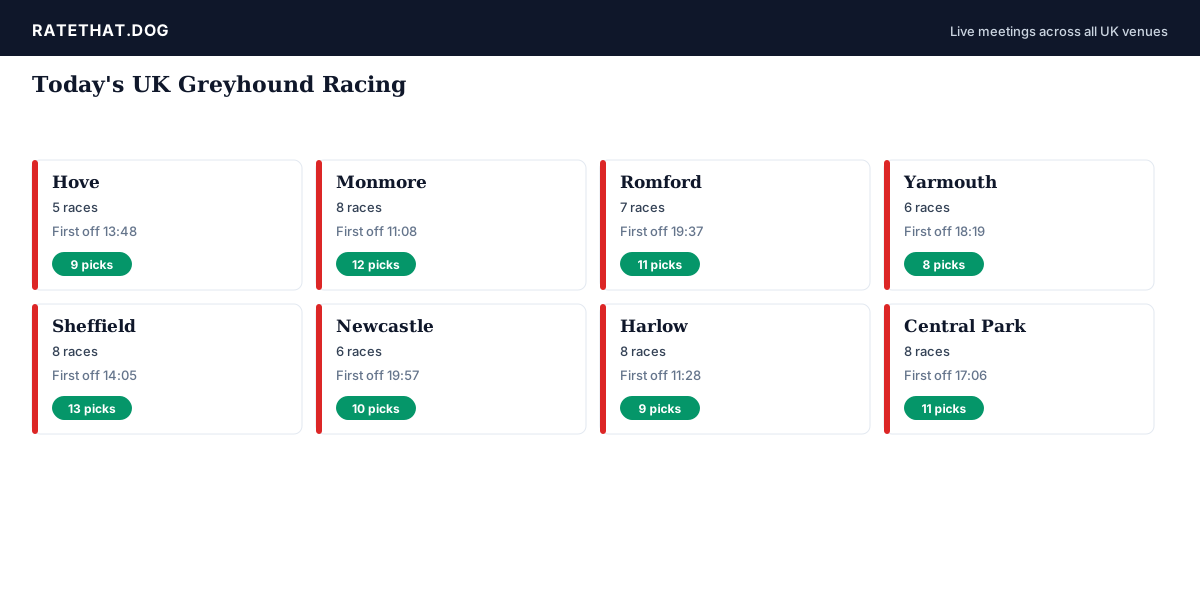
Greyhound racing is a timed sprint between (usually) six dogs over distances ranging from about 230 metres to 660 metres on an oval sand track. There are 19 active UK tracks — from Hove on the south coast to Newcastle in the north — and meetings run most days of the week, often morning and evening on the same card. The full daily UK card is on today's racing, and live results stream into the Live page as each race finishes.
Each dog wears a numbered, coloured jacket linked to its starting trap. The traps are always the same: Trap 1 is red, 2 is blue, 3 is white, 4 is black, 5 is orange, and 6 is striped (black and white). Once you've memorised that you'll never have to look it up again — and it makes scanning a race finish much easier on TV.
What's the simplest bet to start with?
The two bets that 95% of casual punters use are win and place.
A win bet pays out only if your dog finishes first. Returns are at the dog's starting price (SP) — so a 4.0 SP win bet returns three times your stake plus your stake back.
A place bet (also called "to be placed") pays out if your dog finishes first or second in a six-runner race. The catch is the price: place bets are settled at a quarter of the win odds. A dog at 8.0 SP that finishes second pays you (8.0 - 1) / 4 = 1.75 units profit per unit staked. It's a steadier, lower-variance way to bet — and a sensible place to start if you're learning.
There are forecast and tricast bets too (predicting the first two or three home in order), but the maths gets harder fast. Stick to win and place until you've got a feel for the game.
How do I read a greyhound racecard?
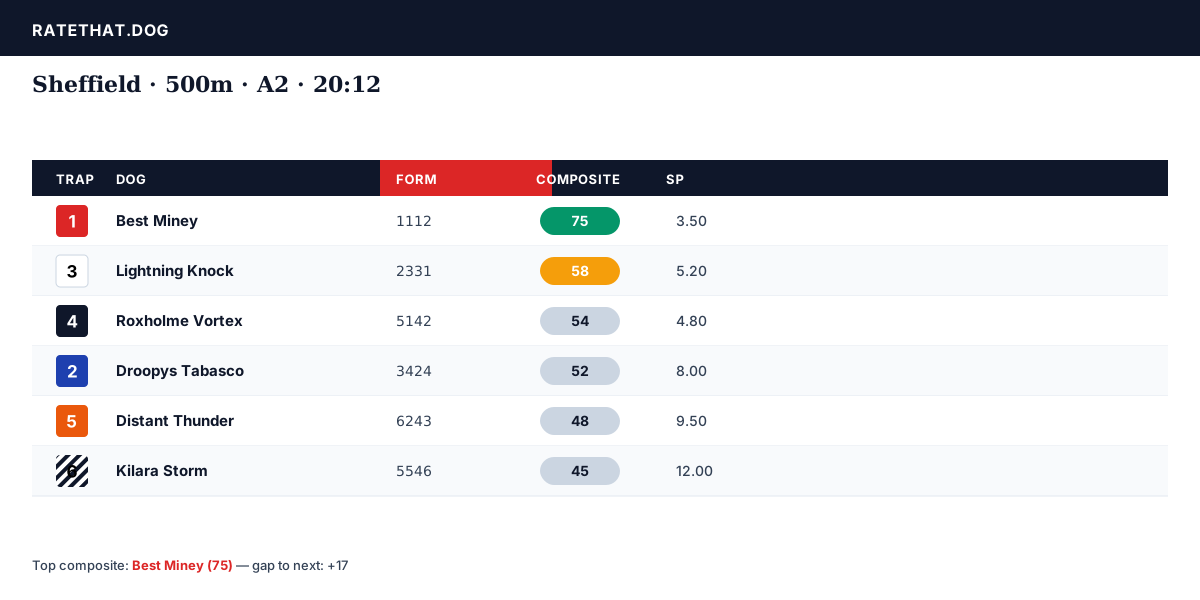
A racecard is the form sheet for a race. It tells you the dog's name, its trainer, its recent finishing positions ("form"), and key stats like average winning time at this distance. On ratethat.dog we add a layer on top: a composite score for each dog (0-100), pulled together from speed, suitability, and form data, so you can spot the standout runner at a glance.
The single most useful column on any racecard is recent form. A "1112" means the dog finished first, first, first then second in its last four races — it's in cracking form. A "6645" is the opposite. Don't overthink form before you can read it cleanly.
What's a "good" first pick?
The honest answer: a dog you can justify in one sentence.
If you can say "I'm backing Trap 1 at Monmore because Trap 1 wins 22.5% of 480m races there over 16,000 runs and this dog has the highest composite score in the field" — that's a justified bet. If you're picking because you like the name, that's gambling, not betting.
- Check today's Hot Dogs. These are dogs with a composite score of 60+ that have no obvious rival in their race. They've historically hit at around 28% strike rate at that threshold — which is high, in greyhound terms.
- Pick a track with strong trap bias. At Hove (500m), Trap 1 wins 22.5% of races. At Yarmouth (462m), it's Trap 3 at 22.2%. Backing the right trap on the right track is one of the easiest edges to learn.
- Stay in one grade. A1 (the top grade) and A8-A11 (lower mid-grades) behave very differently. Pick one and watch a few cards before mixing.
How much should I stake when I'm starting?
Whatever amount you'd be relaxed about losing entirely. Most regulars settle on level stakes — the same unit on every bet — because it makes performance easy to track. Track every bet (dog, track, price, result, reasoning) and after 50 bets you'll see whether your instincts are profitable, neutral, or losing.
Where can I see greyhound results?

Every UK meeting's results are on ratethat.dog/todays-results within a few minutes of each race finishing — and on Today's Greyhound Racing Results for the wider UK card. We also publish how our top picks have performed each day, with a Historic Results archive going back through previous meetings.
If you want to learn the deeper mechanics — composite scores, suitability, race confidence — head to the Guide. Each concept has a short, plain-English explainer.
Frequently asked questions
Is greyhound betting legal in the UK?
Yes. UK greyhound racing is regulated by the Greyhound Board of Great Britain (GBGB) and betting is legal for over-18s with any licensed bookmaker.
What's the minimum bet on greyhounds?
Most bookmakers accept stakes from £0.10 online. On-track Tote bets typically start at £2.
How long does a greyhound race last?
A 480m race takes about 28-30 seconds; 270m sprints last roughly 16 seconds; marathons (660m+) take around 40.
Do favourites win in greyhound racing?
Roughly 30-35% of the time depending on grade and track — meaning the favourite loses around two-thirds of all races. There's room to find value if you're disciplined.
Where can I learn more before placing a bet?
Start with the RateThatDog Guide — every metric on the site, in plain English, with worked examples.